
Your dog’s fur is more than skin deep.
Shiny and Soft. Rough and dry. Your dog’s fur is more than skin deep. How many times have you seen a person with a head of thick, shiny hair and thought… They are so lucky. They look so healthy.
Same thing when you see a dog strolling by with a shiny coat. You are tempted to pet and stroke their fur. A dog with a shiny, soft coat can appear more vital, healthy and energetic.
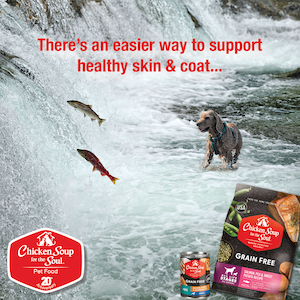
Why do some dogs have such beautiful fur and others do not? As in people, genetics and environment can play a role but a well- rounded, complete and balanced diet is key to skin & coat health. The right amount of omega fatty acids, proteins, vitamins and minerals can help maintain a healthy texture, minimize skin concerns and reduce shedding. An important key to healthy skin and coat is the inclusion of Omega-3 and Omega-6 in their diets.
What is Omega 3 and Omega 6? Omega 3 and Omega 6 are fatty acids. They are considered “essential” nutrients because dogs need these to thrive but cannot produce them on their own. Omegas provide energy, modulate inflammation, help absorb vitamins and promote brain and heart health.
What are good sources of omegas? Omega -3 is typically found in cold water fish such as salmon and tuna. Omega-6 can be derived from vegetable oil, chicken and animal fats, nuts and seeds.
Omega-6 fatty acids can promote inflammation, while omega-3s have anti-inflammatory properties, so a proper balance is crucial for overall health. The Association of American Feed Control Officials (AAFCO) requires a ratio of 30:1 omega-6 to omega-3. Of course, this percentage will depend on the breed and overall health of your dog. To make sure your canine pal is getting the proper daily amounts of omegas – make sure to check the ingredient deck on the food you feed them.
Other contributors to healthy coat are brushing, exercise and proper bathing.
A dull coat, bald spots, dandruff, itching and dry patches are signs of an unhealthy coat. And an unhealthy coat can signal more serious underlying health issues like nutrient deficiencies, parasites, dehydration or allergies.
As with any concerns, contact your vet to discuss.